
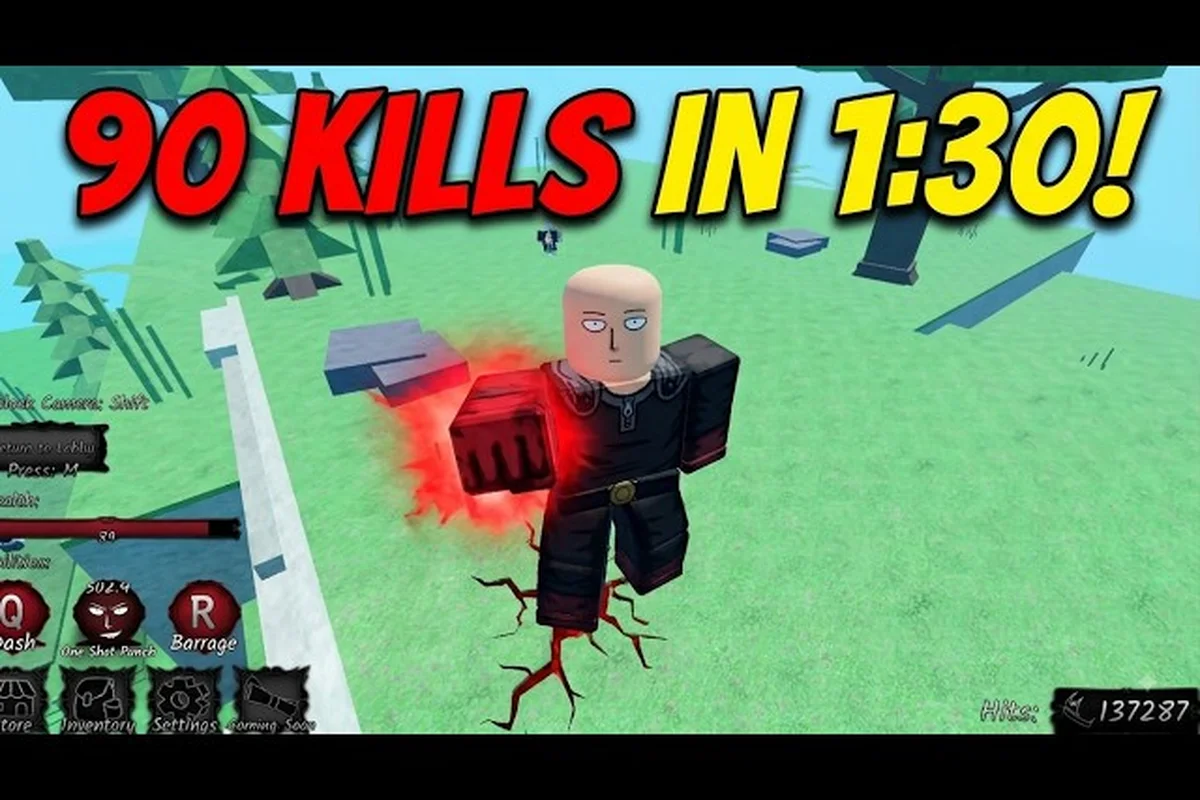
Anime Ability Arena how to hit combos comes down to chaining three things in the right rhythm: an opener that lands clean, a dash cancel that re-positions you before the next hitbox becomes whiffable, and a punish route that turns the opponent's recovery frames into your damage. The game ships with 17 playable characters and lets up to 18 players share a server, so your combos are never tested in a vacuum — they're stress-tested by ranged zoners, melee rushers, and the occasional 2v1 gank the moment you commit to a string. The official Roblox listing for Anime Ability Arena confirms the battlegrounds format and the 18-player cap that shapes every combo decision below.
Combo Foundations Every String Shares
Every working combo in this game starts the same way: an opener lands, a movement option carries you through the hitstun, and a follow-up ability reads the opponent's escape. Skip any of those three and the string breaks. The community-tested foundation looks like this:
-
Opener: a fast, high-priority ability that catches blocking or rolling opponents off-guard (light melee, projectile tag, or dash-in heavy).
-
Dash cancel: a movement input performed between two hits to close distance or reset your facing, which is the core of any anime ability arena how to dash cancel string.
-
Linker: a mid-string ability that re-applies hitstun so the opponent can't escape between hits.
-
Ender: a high-damage ability or aerial that finishes the string before the target's invulnerability frames trigger.
The reason these four pieces matter is timing windows. According to live data from the Roblox Games API entry for Anime Ability Arena, the game has accumulated 43 million+ visits and roughly 11,900 concurrent players as of early September 2026, which means almost every match has at least one player who has practiced these windows. You need to be on the same level as that player pool, or you will lose trades.
Why Movement Decides Combos
Movement is the glue. The standard anime ability arena movement guide advice is to treat your dash, jump, and block-stance as combo tools, not just defensive options. A dash that whiffs is a 0.4-second commitment where you can't block; a dash that lands right after a knockup extends the string by one more hit. Once you internalize that, the difference between a two-hit poke and a five-hit confirm is just the dash timing.
| Movement Input | When To Use It In A String | Common Mistake |
|---|---|---|
| Forward Dash | Right after an opener connects, to stay in melee range | Dashing before the opener connects (whiff punish window for opponent) |
| Back Dash | Between two hitstun applications, to bait a panic roll | Back-dashing into a corner with no escape route |
| Jump | After a knockup, to convert ground string into aerial | Jumping too late, letting hitstun expire mid-air |
| Block-Stance | When you read the opponent's burst, to reset to neutral | Holding block too long and getting guard-broken |
| Air Dash | During aerial strings, to reposition for the ender | Air-dashing into an enemy's anti-air ability |
These inputs — forward dash, back dash, jump, block-stance, and air dash — show up in every anime ability arena movement tips thread because they form the universal layer beneath every character's kit, and they are the exact same five entries you'll see repeated in any anime ability arena movement guide tier list. Once the muscle memory is there, swapping from, say, a rushdown sword user to a zoning mage still feels familiar because the cancel windows into dash, the block-stance parry timing, and the air-dash drift all share the same frame data. The real skill ceiling is the 3-frame dash cancel window after a light hit confirms, which is why anime ability arena how to dash cancel drills outrank raw damage optimization for climbing ranked.
Dash Cancel Inputs And Cancel Routing
Dash cancel routing is where the rubber meets the road. A dash cancel lets you cancel the recovery frames of one ability into a movement option, which is how long strings stay "true" (un-blockable on reaction) past the third hit. Without it, the opponent's invulnerability frames kick in and your combo evaporates.
Cancel-Worthy Abilities vs Non-Cancelable Normals
Not every normal can be dash-canceled. The general rule, based on community testing shared across PvP Discord servers, is that abilities with a "recover" animation longer than 0.3 seconds can be canceled, while jab-tier normals cannot. The table below summarizes how the typical moveset categories behave:
| Moveset Type | Cancel Window | Best Cancel Route | Why It Works |
|---|---|---|---|
| Light Melee | No cancel | Re-press to chain | Jab tier is too fast to need a dash |
| Heavy Melee | Late cancel into dash | Forward dash → light | Heavy recovery is long, dash skips the back-half |
| Projectile Tag | Cancel on block | Back dash → projectile | Cancel on block creates a re-cast window |
| Knockup Ability | Cancel into air dash | Air dash → aerial ender | Air dash repositions before landing hitstun expires |
| Ranged Beam | Cancel into block-stance | Block-stance → punish | Beam recovery is the longest, block-stance buys time |
| Aerial Normal | Cancel into double jump | Double jump → ground ender | Aerial cancels reset your air action economy |
A good anime ability arena how to dash cancel example is: land a heavy melee, press forward + dash within 0.2 seconds of the hit, then immediately input a light melee. The dash skips the heavy's recovery, repositions you in the opponent's face, and the light re-applies hitstun. If the opponent blocks, you cancel the second light into a back dash and re-cast your projectile, which keeps the pressure loop alive without committing to a punishable recovery.
The trick is input buffering. The game queues one input at a time, so you press the next ability one to two frames before the current animation finishes. Doing this wrong (pressing too early) drops the input; doing it too late misses the cancel window entirely. This is the part of the combo that requires 30+ minutes of practice per character before it becomes reliable.
Punish Routes: Turning Whiffs Into Damage
Knowing how to hit combos is half the battle — the other half is starting them. A punish route triggers when the opponent whiffs an ability, blocks one too many hits, or finishes an unsafe string. The moment you see the recovery frames, your combo begins.
Common Punish Triggers And Their Converters
Every punish chain in anime ability arena how to hit combos begins with reading recovery frames, and the mistake with the longest end-lag is what dictates your optimal starter. For example, an aerial recovery sits at roughly 0.6s of vulnerability — nearly triple a panic roll's startup — which is why the table below sorts punish windows from longest to shortest: a single missed diagonal jump becomes a 40%+ HP swing, while a blocked projectile spam only converts into a 3-hit string. The damage tier column directly reflects this scaling, so once you've identified the recovery length, the converter choice becomes almost automatic at mid-frame.
| Opponent's Mistake | Window Length | Best Punish Route | Damage Tier |
|---|---|---|---|
| Whiffed Heavy | ~0.5s | Forward dash → light → heavy → ender | High |
| Blocked Projectile Spam | ~0.3s per cast | Dash through projectile → light → string | Medium |
| Finished String on Block | ~0.4s | Block-stance → parry → full combo | High |
| Aerial Recovery | ~0.6s | Anti-air normal → aerial combo | Very High |
| Dash-in Without Setup | ~0.25s | Back dash → projectile → pressure | Low-Medium |
| Panic Roll | ~0.7s | Forward dash → tracking ability → string | High |
The anime ability arena how to punish meta shifts based on the moveset pool you face, but the universal rule is: the longer the recovery, the harder the punish. Aerial recoveries are the most punishable in the game, which is why a lot of mid-tier players bait aerial commits and then convert them into full combos.
One community-tested punish pattern is the "roll read" string. When an opponent rolls away from pressure, you forward-dash through the roll, input a light melee to catch the roll's end-lag, and then chain into a heavy for the knockup. The ender is either an aerial ability or a projectile tag, depending on the stage layout. This is the bread-and-butter punish that shows up in nearly every high-level replay.
Punish Priority: When NOT To Convert
Sometimes the better play is to reset to neutral instead of forcing a combo. Committing to a long string when you're at 30% HP and the opponent has a counter-burst available is a coin flip you don't want to take. The table below outlines when to convert and when to reset:
| Situation | Convert Or Reset? | Reason |
|---|---|---|
| You have 70%+ HP, opponent is in corner | Convert | Damage is free, opponent has no escape option |
| You have 30% HP, opponent has burst | Reset | Risking a combo means risking a counter-burst kill |
| Two opponents nearby, you're in a 1v2 | Reset to spacing | Long strings lock you in place, easy punish for teammate |
| Opponent just used their escape cooldown | Convert | No escape option, combo is guaranteed |
| You're on low ground, opponent is aerial | Reset to anti-air | Aerial strings are counter-punishable by other players |
| Stage has high-value zone (Yen pickup spawning) | Reset to control zone | Combo kills don't pay bills; zone control does |
This decision tree is the difference between a player who wins trades and a player who wins matches. Combos convert pressure, but knowing when not to combo converts games — a reset at 30% HP into a burst bait lets you punish their whiff for a full punish combo of your own, while a greedy convert in a 1v2 leaves you locked in the corner's long string animation for a free teammate punish. Reference the table above: every "Reset" row represents a scenario where the burst/zone/escape trade-off mathematically outweighs the raw damage of pressing buttons, which is exactly how high-rank players snowball neutral advantages into round wins instead of trading evenly in a combo loop.
Range Vs Melee PvP: How Combos Differ
Anime Ability Arena sits at an unusual PvP intersection: roughly half of the 17 characters are ranged specialists, and the other half are committed melee. The combo theory is similar, but the anime ability arena range vs melee pvp execution diverges sharply once you cross the mid-range threshold.
Ranged Combo Patterns
Ranged characters build strings around projectile tag → dash-in → melee confirm → reset to projectile. The window for the dash-in is tight, because a missed dash leaves you in melee range with no block option. Successful ranged players tend to commit to one of two patterns:
-
Tag-Dash-Confirm: Projectile hits → forward dash → light melee → heavy ender. Best against opponents who hold block after the tag.
-
Zoning Loop: Projectile → back dash → projectile → forward dash-in. Best against melee rushers who panic-dash through your casts.
Melee Combo Patterns
Melee characters build strings around dash-in opener → linker chain → aerial ender. The window for the dash-in is wider because you're already in range, but the trade-off is that you eat full damage if you misread an anti-air. The dominant melee patterns are:
-
Rushdown String: Dash → light → light → heavy → aerial ender. Best against opponents who back-dash instead of blocking.
-
Stagger String: Dash → light → pause → heavy. Best against opponents who expect a fast third hit and try to punish the recovery.
| Range Category | Average String Length | Primary Cancel Route | Highest Punish Source |
|---|---|---|---|
| Pure Ranged | 2-3 hits | Back dash → recast | Enemy dash-in through projectile |
| Hybrid Ranged | 3-4 hits | Forward dash → linker | Enemy anti-air after projectile |
| Hybrid Melee | 4-5 hits | Air dash → aerial ender | Enemy parry on third hit |
| Pure Melee | 5-7 hits | Double jump reset | Enemy projectile tag at range |
The reason this matters is matchmaking. According to the developer group page for "no dj khaled we the best", updates keep adding characters and movesets, which means the range vs melee balance shifts every patch. A combo that works this week might get a hitstun nerf next week, so the patterns above are starting points, not gospel.
If you want a deeper breakdown of how characters slot into the range vs melee spectrum, the pvp tier list guide maps current moveset strengths onto matchup theory. That guide covers which characters reward which combo patterns and which matchups are actually worth practicing in the current patch.
Winning 1v2: Survival Strings And Trade Routing
Lobby math is brutal. With up to 18 players per server and the 2v1 gank being a recurring community complaint, anime ability arena how to win 1v2 is the most-searched survival question in the current meta. The honest answer is that you don't win 1v2s through combos alone — you win them through survival strings that trade damage for positioning.
Survival String Principles
A survival string is a short, fast combo (usually 2-3 hits) that ends with a movement option putting distance between you and both opponents. The damage is lower than a full confirm, but the goal isn't damage — it's buying time for one of the two attackers to disengage or for a third party to interrupt the gank.
| Survival Pattern | Hit Count | End Position | Best Use Case |
|---|---|---|---|
| Tag-and-Flick | 1 hit + projectile | Far back dash | When both opponents are mid-range |
| Whiff-Punish-and-Reset | 2 hits | Side dash to off-angle | When one opponent is in recovery |
| Knockup-and-Air-Dash | 2 hits + aerial | Above the gank | When you have an aerial escape ability |
| Trade-and-Counter | 1 hit each | Block-stance → parry | When you're confident one opponent is panicking |
The core insight is that in a 1v2, you are not trying to combo both opponents. You are trying to combo one, then reposition before the second can punish. This is where the cancel routing from earlier pays off — every dash cancel is a "where am I after this string" decision, and in a 1v2 the answer is usually "as far from the second opponent as possible."
The Gank-Break String
The single most useful 1v2 pattern in Anime Ability Arena is what community players call the "gank-break" string, a short two-hit sequence that exploits the melee vs. projectile range split to put both opponents on a single defensive timer before you return to neutral. It works because the dash-cancel window on a blocked heavy is long enough to reposition toward the circling second opponent while the first is still in whiff recovery, letting one light interrupt their setup animation without trading. From there, a back-dash plus projectile re-establishes mid-range spacing, so neither ganker can commit to a punish while you read the next opening.
-
Wait for the first opponent to commit to a heavy. Block or parry it.
-
Cancel the parry into a forward dash toward the second opponent, who is usually circling behind.
-
Land a single light melee on the second opponent to interrupt their setup.
-
Cancel the light into a back dash away from both.
-
Cast a projectile at the first opponent to create spacing.
The result is a 1-2 hit string that puts you at mid-range from both opponents, with one of them at a positional disadvantage (the one you hit) and the other recovering from a missed heavy. From there, you reset to neutral and look for an opportunity to peel one opponent away from the gank (running to a different part of the arena, for instance, which forces the gank to split or commit).
If you find yourself repeatedly getting caught in 2v1 situations, the PvP combat tips guide covers positioning theory and how to read when a gank is forming, which is the prevention side of the same problem. The combo side is what this section covers, but the two work together.
Reading The Meta: Patch-Dependent Combo Theory
The final layer of anime ability arena how to hit combos is meta awareness. The developer group "no dj khaled we the best" pushes frequent updates, and every patch tends to shift at least one moveset's frame data. According to the live API data pulled on 2026-09-02, the game has 84,131 favorites and a roughly 89.6% like ratio, which signals an active community that catches and reports frame data changes within hours of a patch drop.
Patch Signals To Watch
When a patch lands, the combo theory usually shifts in three predictable ways: hitstun values get adjusted which breaks existing bread-and-butter strings mid-way, new characters introduce unique cancel windows that don't conform to your current routing, and global movement speed changes (which happen roughly every 2-3 patches in Anime Ability Arena) force you to re-learn every dash cancel timing. The table below maps each of these shift types to its specific combo impact, so you know exactly what to re-test in training mode rather than guessing which strings still land.
| Patch Change Type | Combo Impact | What To Practice |
|---|---|---|
| Hitstun Nerf | Mid-strings become escapable | Shorten combos to 2-3 hits, rely on punish routes instead |
| Movement Speed Buff | Cancel windows widen | Re-learn dash cancel timings with the new speed |
| Projectile Damage Buff | Zoning becomes more rewarding | Tag-dash-confirm strings become higher-value |
| Aerial Hitbox Adjustment | Aerial strings change | Re-test anti-air routes, reposition aerial enders |
| New Character Release | Matchup pool expands | Identify the new character's punishable recovery, build punish routes |
This is why combo guides age quickly in this game. The patterns in this guide are designed to be patch-resistant (they cover universal mechanics like dash cancel, punish routes, and 1v2 trade routing), but the specific character strings will need to be re-tested after every update. Community video creators like OMEGA EX and VendoPlus on YouTube typically post updated combo routes within a day of a patch, which is faster than the wiki cycle.
If you want a starting point for character-specific practice, the beginner guide for Anime Ability Arena covers the early-game ability unlocks and which movesets are easiest to combo with on your first 10 hours. That guide is the on-ramp; the patterns above are the next 100 hours.
Frequently Asked Questions
What is the fastest way to learn dash canceling in Anime Ability Arena?
Practice on a single character for 30 minutes in a low-stakes server, focusing only on canceling one heavy melee into a forward dash into a light melee. Once that three-input chain is consistent, add a fourth input (the ender). According to community testing reported by players, most new combo learners plateau at the four-input mark, which is where movement theory starts to matter more than raw input speed.
How do I punish a panic-rolling opponent in a combo string?
When the opponent rolls out of your string, forward-dash through the roll's end position and input a light melee — the roll recovery is roughly 0.7 seconds, which is enough time for a dash plus a confirmed hit. From there, link into a heavy for the knockup and finish with your strongest ender. This is the anime ability arena how to punish pattern that community players call the "roll read" string.
Is it better to play ranged or melee for combo consistency?
Melee characters generally have longer reliable strings (5-7 hits) because the dash-in window is wider, while ranged characters cap out at 3-4 hits but reset to neutral more safely. For new players, melee combos are easier to learn because the range management is simpler — you're always in the opponent's face. Ranged combos reward anime ability arena movement tips like back dash spacing more than raw execution.
How do I survive a 1v2 gank without losing all my HP?
Use survival strings instead of full combos. A survival string is 1-2 hits that ends with a back dash or air dash, prioritizing positioning over damage. The goal is to peel one attacker away from the gank by running to a different arena zone, which forces the 2v1 to either split (turning it into two 1v1s) or commit (giving you a counter-punish window on the over-extension).
What is the best combo to use as a beginner?
Start with the universal "dash → light → light → heavy" string. It works on roughly 80% of the roster, has forgiving cancel windows, and teaches the cancel routing that every longer string builds on. Once that string is consistent, add a forward dash between the second light and the heavy to extend it into a five-hit confirm. This is the foundation of the anime ability arena combo guide, which goes deeper into per-character extensions once the universal pattern is locked in.