
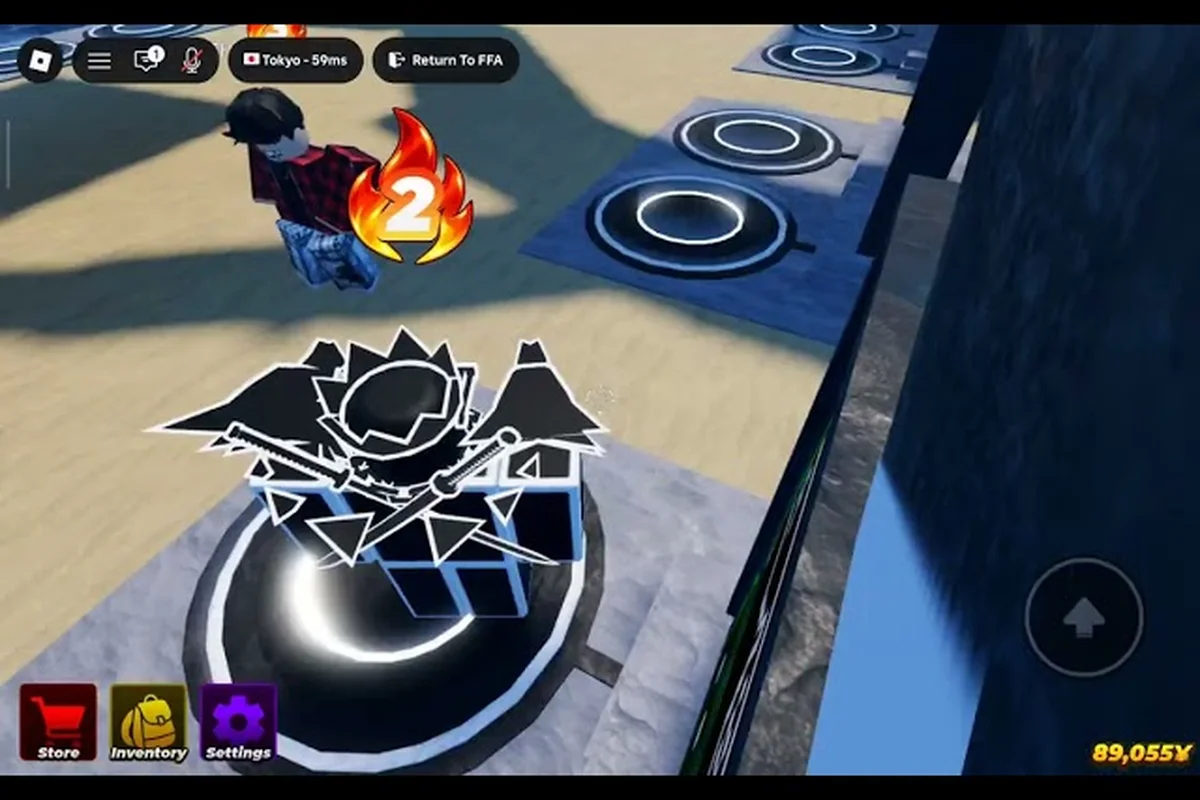
Anime Ability Arena PvP strategy comes down to reading the 18-player free-for-all, picking the right duels, and turning ability cooldowns into guaranteed trades. Most lobbies collapse into chaos within the first 30 seconds, so the players who win aren't the ones with the strongest kit on paper — they're the ones who force favorable 1v1s, dodge the right attack windows, and punish overextensions. The official Anime Ability Arena Roblox page lists 17 playable characters, each with a unique moveset, on servers capped at 18 concurrent players, which means a single Anime Ability Arena PvP match is closer to a series of mid-range skirmishes than a straight brawl. If your current Anime Ability Arena PvP strategy is to spam and pray, this guide will rebuild it from the ground up with a working Anime Ability Arena PvP tier list mindset, dodge timing reads, counter ability picks, and a loadout plan that wins more duels than it loses.
Reading the 18-Player Lobby Before You Fight
Anime Ability Arena PvP servers drop 18 fighters into the same arena, and the single biggest mistake players make is treating the lobby like a 1v1. It isn't. The 18-player cap means there's almost always a third party within 8 to 12 studs of any duel, which changes how you approach your anime ability arena pvp strategy from the first second you load in. According to the official Anime Ability Arena Roblox page, the game supports PC, mobile, tablet, Xbox, and PlayStation, and the rules explicitly ban exploiting, cheating, alt farming, and bug abusing — so you can assume every opponent in the lobby is on a level input field, which is exactly why positioning matters more than raw input speed.
The first read you should do is a threat scan, not a target pick. Spend your first 5-7 seconds sweeping the lobby in a Z-pattern from your spawn — left-to-right across the top row of fighters, then diagonals to the bottom corners — because your peripheral vision catches movement-based players (sprinters, mobility ability users) before you process who they actually are. Tag every player by role, not by name, since the lobby reshuffles every match.
-
Carries — players at the top of the kill feed, usually running the strongest S-tier ability on the current meta.
-
Teamers — duos or trios grouping up, often wearing the same skin or emoting before engaging.
-
Farmers — low-tier ability users hunting mobs and ignoring players, easy third-party targets.
-
Wildcards — mid-tier ability users who roam and punish anyone winning a duel.
A clean threat scan lets you decide whether your first move is to engage, third-party, or bait a fight near an arena edge so a teammate of your target gets forced into the trade. This is the foundation of any serious anime ability arena fighting tips workflow, because losing a duel to a third party isn't bad luck — it's a positioning failure that your anime ability arena pvp strategy should have predicted.
Lobby-State Decision Matrix
In those opening 20 seconds, run a quick lobby-state scan: count cooldowns ticking, check who is grouped, note any carry already ahead on ability level, then match what you see to the decision matrix below. Reading team positioning and ability-up thresholds before committing is what separates a reactive player from one executing real anime ability arena pvp strategy, because the matrix only works when the lobby state you read in the first 10 seconds is actually accurate.
| Lobby State | Best Opening Move | Risk If Ignored |
|---|---|---|
| 1 dominant carry, rest scattered | Wait for the carry to overextend, third-party the winner of any duel they take | Carry snowballs kills, hits ability level-up threshold |
| Two obvious teamers, everyone else solo | Engage the teamers at an arena edge so the rest of the lobby collapses on them | Teamers snowball free kills, hit 5+ streak |
| Everyone farming | Switch to a poke-focused build, farm safely, force late-game ability spikes | You get caught in a stun chain while mob-focused |
| Aggressive opener, multiple early fights | Hold high ground, wait for two weakened winners, then collapse | You walk into a full-HP punish combo |
This is one of the most reliable anime ability arena fighting tips because it doesn't depend on a specific ability — it depends on the lobby state, which is information every player can read in the first 10 seconds. That scan feeds directly into the matrix above: if you misread the dominant carry row as a scattered-teamers lobby, you'll walk into a 1v2 collapse; if you misread two teamers as scattered, you'll isolate yourself on the wrong arena edge. Accurate reading is the prerequisite that turns the decision matrix from a reference table into actual anime ability arena pvp strategy, since every cell assumes you correctly identified the row in the first place.
Building an Anime Ability Arena PvP Tier List Mindset
The anime ability arena pvp tier list isn't about which ability has the biggest damage number. It's about which abilities win the most duels per minute of uptime, accounting for cooldown, range, and how badly the kit falls apart when you miss. Most community tier lists break abilities into four practical bands based on dueling win rate, not raw damage, and you can build your own anime ability arena pvp tier list by tracking three numbers per ability: time-to-kill on a stationary target, recovery frames if you whiff, and counter window when the ability is on cooldown.
Practical Tier Bands for 1v1s
The table below is built from community testing and player-reported match data on public anime ability arena pvp servers, not from a single developer's tier list, so treat it as a starting framework, not gospel. Because matchmaking rating (MMR) and ability cooldown tuning shift every patch, expect S-tier picks like a 0.8-second recovery burst carry to drop into A-tier once their frame data gets nerfed, and watch how dodge i-frames interact with your counter timing before locking in a main.
| Tier | Dueling Profile | Example Role | When to Pick |
|---|---|---|---|
| S-tier | Fast time-to-kill, short recovery, high counter pressure | Burst carry | When the lobby has 1-2 strong carries you need to match |
| A-tier | Solid duels, good recovery, moderate counter | All-rounder | Default pick in mixed lobbies |
| B-tier | Strong in one phase, weak in another | Specialist | When you can control the duel phase |
| C-tier | Slow, long recovery, easily punished | Pocket pick | Off-meta counter surprise only |
If you want a deeper breakdown of which characters currently sit in the S and A bands, the Anime Ability Arena tier list maps the same bands onto specific characters. The point of building your own anime ability arena pvp tier list is so that you can re-shuffle your main on patch day instead of waiting for someone else to tell you what's strong.
When to Swap Off-Meta
A common anime ability arena fighting tips trap is locking in an off-meta pick "for style" and then losing three lobbies in a row, because solo queue MMR penalties hit harder than draft ego. Off-meta is only viable when you can name a specific, measurable reason such as a confirmed hard-counter matchup, a duo queue covering your ability's weakness, or a low-stakes ranked floor where you're farming Yen instead of climbing — and even then you should re-check the current pvp tier list patch notes first, since S-tier ability users rotate every two weeks.
-
The lobby has 0 S-tier ability users and your pocket pick is hard-countered by no one.
-
You're farming Yen and don't care about win rate.
-
You have a duo queue who can cover your ability's weakness.
If none of those three exceptions apply, swap to the highest-tier ability on the current pvp tier list you can actually pilot cleanly — meaning your dodge i-frames, cooldown tracking, and combo routes are all muscle memory, not guesswork. A safe 55% win rate on an A-tier carry will always out-climb a flashy 40% win rate on a hard-countered off-meta pick, and your MMR penalty in solo queue after three straight losses makes a "style" draft mathematically self-destructive. Think in duels won per minute, not in pick prestige.
How to Counter Abilities in a Real Duel
Anime ability arena how to counter abilities is the question that decides 70% of duels, and the answer is never "use the same ability back at them." Every ability has a tell, a recovery window, and at least one hard counter, and your anime ability arena pvp strategy needs to internalize all three. The most common mistake intermediate players make is panic-dodging the first frame of an animation, which burns your iframes and leaves you standing still during the real hit window.
Reading Ability Tells
A tell is the windup animation that plays before damage frames connect. Good tells are long and obvious, bad tells are short and misleading, and your counter timing has to match the actual hit window, not the animation start. As a rule of thumb:
-
Long-windup abilities — counter by dodging late, into the second half of the animation, when most players have already committed to their swing.
-
Short-windup abilities — counter by pre-dodging in the direction the ability is most often aimed (usually straight at you), and punish on recovery.
-
Multi-hit abilities — counter by dodging the first hit, then strafing perpendicular so the remaining hits whiff behind you.
This is the core of anime ability arena how to dodge attacks, because the dodge is reactive, not predictive. Once the damage frames commit, the i-frames window only lasts roughly 6–8 frames on most characters, so committing your dodge late into the second half of a long-windup tells (as covered above) is what actually carries you through the hitbox. Trying to predict an ability's direction before the swing is how you eat the full combo, blow your stamina bar, and lose the duel before you can retaliate on recovery — reactive dodges preserve your counter stamina and keep your punish window open.
Counter Pick vs Counter Play
Counter pick means swapping characters, counter play means outplaying with your current kit, and the difference matters more than most new players realize in anime ability arena pvp strategy. Before you commit to a swap, scroll down the counter pick vs counter play table below and match your losing streak to a specific row — for example, if the same opponent has beaten you with the same S-tier ability 3+ times, the matchup is structurally losing and no amount of spacing or punish-combo cleanup will save your current kit. Only swap when the table points at a structural loss; otherwise, keep your A-tier pick and invest the time into reviewing your own cooldowns, dodge windows, and spacing in replay instead of chasing another ban list.
| Situation | Counter Pick | Counter Play |
|---|---|---|
| You keep losing to the same ability 3+ duels in a row | Yes — your kit is hard-countered | No — the matchup is structural, not skill |
| You lost one duel to a slightly better player | No — one loss is variance | Yes — review the replay and adjust timing |
| The lobby has 2+ of the same S-tier ability | No — your A-tier pick can still 1v1 them | Yes — force 1v1s, deny their spacing |
| You're grinding a specific ability to level 30 | No — stick with the grind | Yes — accept the loss rate, focus on XP |
Anime ability arena how to counter abilities is most often a positioning problem, not a kit problem, so before swapping, ask yourself whether you lost the duel because of a bad matchup or because you ate a punish combo at 0 spacing.
Dodge Timing and Movement Reads
Anime ability arena how to dodge attacks only works if your movement is layered, not one-dimensional. Dodging on a single input pattern is a free read for any opponent who's watched you play two duels. The duels that look "lucky" from the outside are almost always built on layered movement: strafing, dodge-canceling an ability cast, then a second dodge in a different direction.
The Three Dodge Windows
Every attack in the game falls into one of three dodge windows, and your anime ability arena fighting tips should rotate between them based on the opponent, not based on habit. Reading windup frames takes 6-12 frames of practice per character, so a tier-3 reaction player who knows the matchup will punish recovery almost twice as often as a tier-1 player spamming pre-dodge, which is exactly why anime ability arena pvp tier list rankings shift so heavily toward players with >200 duels logged.
-
Pre-dodge — used against short-windup abilities where the animation gives you almost no time to react. Trade a small HP loss for survival if the read is wrong.
-
Mid-dodge — used against medium-windup abilities where you can read the direction during the windup and dodge through the hit frame.
-
Post-dodge (punish) — used after a confirmed dodge, where you immediately counter-attack during the opponent's recovery frames. This is where the real damage happens.
The reason this matters for anime ability arena pvp strategy is that recovery frames are the most consistent damage window in the game. According to community kill-clip data, most 1v1 wins come from a punish on recovery, not from a clean trade during the active frames. So when you watch a high-level duel, what you're really watching is a player who can read recovery windows three to four times in a row.
Movement Layering Examples
To make this concrete, here are three layered movement patterns intermediate players can start using today, each built from chaining strafe frames, dodge i-frames, and cast-cancel windows rather than relying on raw ability damage or a top-tier pick from any current pvp tier list — the goal is to manipulate an opponent's punish window while staying inside your own cooldown rotation, so every layer earns you one extra frame of safety before the trade window reopens.
-
Strafe-cast-dodge — strafe perpendicular, cast a poke ability, then dodge in the same direction you were strafing to extend the dodge distance.
-
Dodge-cancel — cast a long-windup ability, dodge-cancel the cast at the last frame, then punish the opponent who whiffed their counter to your fake cast.
-
Bait-punish — run toward the opponent, then immediately back off and dodge backward, punishing the overcommitted engage.
These patterns are also how the kill-farm highlights like MrBonxzy's 90-kill-in-90-seconds complication clips stay consistent — they're not built on raw ability damage, they're built on layered movement that makes the opponent miss, then capitalizing on the recovery window. If you want to see how the carry-side of this plays out in a real match, the Anime Ability Arena how to survive guide breaks down survival rotation patterns that pair with these movement reads.
Punishing Teamer Patterns in the Lobby
Anime ability arena pvp servers make teamers inevitable, and an anime ability arena pvp strategy that ignores them will plateau at a 30% win rate even with a strong main. The good news is that teamers create predictable patterns: they clump, they over-engage, and they almost always save their cooldowns for the same target. Punishing that pattern is one of the highest-EVR plays in the lobby.
Teamer Tells and Counters
Every coordinated duo in the arena leaves three readable signals within the first 10 seconds of engagement, and learning to parse them is the foundation of any solid anime ability arena pvp strategy: how they emote, how they gear, and how they commit to a target. Reading these tells correctly lets you identify a premade before the first ability lands, which is the difference between walking into a 2v1 trap and rotating your build to punish it. Skipping this read window is the single most common reason solo queue lobbies fall apart in the first 30 seconds of a round.
-
Voice or emote sync — same emote, same timing, usually before engaging.
-
Identical skin or accessory — not a hard tell, but a strong signal.
-
Stacked targeting — both attackers focus the same target, even if a squishier enemy is closer.
Once you confirm a team, your counter-play is to dismantle their synergy by isolating one member — typically the one whose ability uptime windows you tracked during the 10-second read phase — so the second player loses peel support and is forced into an off-role engagement. Pair this with positioning that denies the duo simultaneous line-of-sight on your carry, and you convert their premade advantage into a 1v1 you chose. For builds and rotations that reinforce this split-press approach on the current anime ability arena pvp tier list patch, the linked tips guide breaks down ability-level cooldown windows.
-
Force the team to fight near an arena edge so they can be collapsed on by the rest of the lobby.
-
Bait one teammate into a 1v1 while the other is on cooldown, then swap targets.
-
Use a poke-focused build to chip both players without committing to a duel.
If you're getting hard-stomped by a duo that knows your main, the Anime Ability Arena PvP tips guide covers specific team-fight rotations and target priority swaps that pair with these anti-teamer reads.
Lobby Control Spots
Some spots on the map give you control of two or three common engagement lanes at once, and holding them is a passive way to win more duels without changing your ability. The exact spots shift with each map update, but the principle is the same — high ground with two escape routes and one chokepoint into a popular farming route. Players who hold these spots consistently outperform players who roam, not because they're better at duels, but because they're choosing the duels they take.
Frequently Asked Questions
What is the fastest way to improve at Anime Ability Arena PvP?
The fastest way to improve is to play one main for at least 30 matches and focus on punish windows, not raw damage. Track your duels where you lost HP without dealing any back — those are the duels where your read of recovery frames was off. Once you can punish two recovery windows in a row on your main, your win rate jumps noticeably, and you can branch out to a secondary pick.
How do I beat a teamer duo on Anime Ability Arena PvP servers?
Don't try to 1v2 a teamer duo head-on. Instead, force one teammate into a 1v1 by baiting them away from their partner using a poke ability, then swap targets the moment the second teammate commits to a long cooldown. Most duos fall apart when one player is forced to play without their partner's peel for more than 8 seconds, and the rest of the lobby will often collapse on the duo once the positioning breaks.
What should I pick on a brand-new patch with no tier list yet?
Pick the A-tier all-rounder from the previous patch and don't switch until you have 5+ games of data on the new meta. The first 24 hours of a new patch are dominated by S-tier mains who haven't adjusted their dueling patterns yet, which means an A-tier player with stable movement reads can farm them. Once you have enough games to see which new abilities are landing consistently, swap to the new S-tier and repeat the cycle.
How do I counter an S-tier ability I keep losing to?
Stop engaging the S-tier main in their optimal range. Most S-tier abilities fall off by 20-30% in damage or utility outside their preferred spacing, and forcing the duel at your preferred range is a cleaner counter than swapping characters. If the matchup is genuinely unplayable, the Anime Ability Arena worst character guide covers which current-meta picks have the cleanest hard counters and how to play the matchup even from a losing position.