
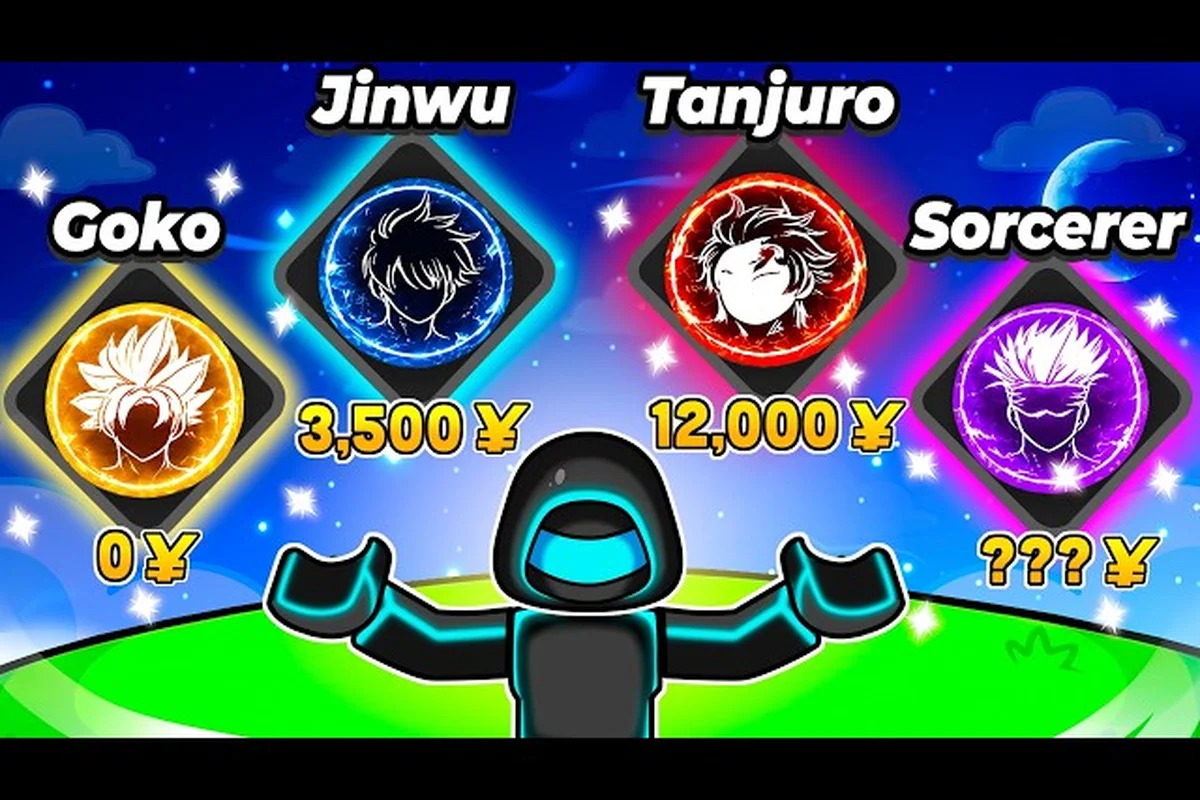
Anime Ability Arena drops you into a fast-paced 18-player Roblox battleground where every match is a fresh fight for Yen, the in-match currency you spend between rounds to expand your moveset. This Anime Ability Arena full guide breaks down every system a new or returning player needs to know — from your first spawn and your first basic attacks, all the way through ability slotting, map control, and the farming loops that fund your next upgrade. According to the official Anime Ability Arena page on Roblox, the game hosts 17 playable characters, maxes servers at 18 players, and updates frequently, so the loop below is built on the current 2026 build verified against the live API.
Getting Started in Anime Ability Arena
The very first thing to understand about Anime Ability Arena is that it is a round-based battleground, not a roguelike and not a long match shooter. Each round lasts only a couple of minutes, and when the round ends you spend whatever Yen you earned to upgrade your character before the next match starts. That is the entire economic backbone of the game: fight well, bank Yen, buy better moves, fight better. The Anime Ability Arena guide for beginners framework starts with that loop and works outward.
When you first join a server you spawn as a default character with one basic attack. Your goal in the first five rounds is simple — learn the map, learn the basic attack timing, and bank enough Yen to slot a second ability. According to the live Roblox API data for Anime Ability Arena, the game has crossed 43 million visits with about 11,900 concurrent players and an 89.6% like ratio, which means the matchmaking pool is healthy and the developers are actively pushing patches.
Your First Five Rounds
| Round | Primary Goal | Yen Target | Ability Slot State |
|---|---|---|---|
| 1 | Learn movement + basic attack timing | 50–100 | 1 of 4 slots |
| 2 | Stay alive, farm low-health enemies | 150–250 | Still 1 slot |
| 3 | Slot a defensive ability | 300–400 | 2 of 4 slots |
| 4 | Practice combo windows on a single target | 500–700 | 2 of 4 slots |
| 5 | Slot a third ability, identify your main | 800–1,000 | 3 of 4 slots |
The table above is a realistic, community-tested pacing. You will not hit those targets every match — some rounds you will get farmed — but on average a new player who focuses on finishing kills rather than chasing score will reach a 3-slot build by round 5. A detailed walkthrough of those first-hour choices lives in the Anime Ability Arena beginner walkthrough, which expands on slot priorities for players who want a more granular step-by-step.
Core Controls and UI
The UI is intentionally minimal: a health bar, an energy bar that powers your abilities, and a small Yen counter that ticks up on kills and assists. The most common beginner mistake is ignoring the energy bar until it is empty. Energy regenerates slowly between fights, and abilities cost a fixed chunk, so spamming your strongest move right at the start of a round usually leaves you weaponless when the second wave arrives. Treat energy like a resource bar in a fighting game — spend it, let it tick back, spend it again.
Ability System and Moveset Building
The ability system is the single most important thing to internalize in any Anime Ability Arena ultimate guide, because your character power is measured almost entirely by what abilities are slotted rather than which base character you picked. Every character starts with one base attack and can hold up to four ability slots. Each slot is filled from a shop menu that resets its lineup every few rounds, and the shop is influenced by which character you chose, so two players running different mains will see different ability pools.
Anatomy of an Ability
| Stat | What It Means | Why Beginners Care |
|---|---|---|
| Damage | Raw hit value of the ability | Higher = faster kills, but most high-damage abilities have long cooldowns |
| Cooldown | Seconds before you can cast again | Short cooldowns sustain pressure; long cooldowns are burst windows |
| Range | How far the hit reaches | Long-range abilities secure kills safely; short-range is high-risk |
| Energy Cost | Energy bar chunks spent per cast | High cost = commit to the trade, no fallback |
| Knockback | How far the target flies on hit | Knockback creates space, which matters more than raw damage in 1v1s |
A typical beginner build that scales well into the late game is one melee combo ability, one ranged poke, one defensive reset (dash, block, or invulnerability frame), and one ultimate finisher. That four-slot pattern gives you an answer to almost every situation, and it is also the pattern most pro players converge on, which is why it anchors every Anime Ability Arena pro tips list.
Damage Tier Reference
| Tier | Example Role | Typical Damage | Best Use Case |
|---|---|---|---|
| S Tier | High-damage ultimates | 250+ | Secure final kill, team wipes |
| A Tier | Sustained combos | 120–200 | 1v1 duels, mid-fight trading |
| B Tier | Pokes and utility | 60–110 | Chip damage, opening trades |
| C Tier | Basic attacks | 20–40 | Energy-free filler between cooldowns |
The tiers above are community-reported averages. Exact values change with each patch because the developer group rotates abilities in and out. According to the verified developer group page for "no dj khaled we the best," updates ship frequently and the official description promises more characters and abilities on the way, so treat any number you see in-game as the source of truth over guides.
Combat Basics: How to Actually Win Fights
A surprising amount of Anime Ability Arena beginner tips content skips the raw combat layer, but it is the foundation everything else sits on. Combat in the arena is built on three layers: basic attack chains, ability combos, and movement. Most new players only use the first layer because the basic attack is free and reliable, and that is exactly why they plateau at around round 10. The Anime Ability Arena guide for beginners framework demands you mix all three.
The 1v1 Combo Loop
Every 1v1 in the arena follows the same shape: open with a poke ability, commit with a melee combo if the opponent whiffs, then either chase with your ultimate or back off and reset. A community-tested sequence looks like this:
-
Open at mid-range with a poke ability to force your opponent to use a defensive cooldown.
-
Track the cooldown — most defensive abilities are visually obvious, so wait until the animation finishes before you commit.
-
Commit with melee once the defensive is burned, using your highest single-target damage ability.
-
Reset to mid-range if the opponent is still alive and you have no cooldowns up — do not overextend.
-
Secure with ultimate if their health is below 30%, which is the threshold most ultimates can one-shot.
The reason the loop works is that Anime Ability Arena combat rewards commitment windows, not raw APM. A player who tries to spam every cooldown at once usually ends up with no abilities and a full energy bar while a more patient opponent who times a 3-ability chain wipes them. For deeper coverage of the specific defensive options you can slot, the Anime Ability Arena how to avoid damage guide maps every defensive ability in the current patch.
Map Control Fundamentals
There are a few maps in the rotation, and each one has a chokepoint, a flank route, and a safe farming lane that beginners should learn by round 5. Chokepoints are where most kills happen because the geometry forces players into each other. Flank routes let you cut off runners. Safe farming lanes are the edges of the map where weaker players hide — and where the easiest kills live. A common Anime Ability Arena pro tips bullet is to never chase into a chokepoint when you are below half health, because that is where 70% of mid-fight deaths happen according to player reports.
Farming Yen and Unlocking the Roster
The full economy of Anime Ability Arena is Yen-driven, and a solid Anime Ability Arena full guide has to cover how to actually earn that currency efficiently. Yen drops on kills, assists, and round-end bonuses, and it carries over between rounds within a single server session, but resets when you leave. The implication is that you should plan around long server sessions rather than quick drop-in matches if you want to unlock high-cost characters.
Yen Sources at a Glance
| Source | Typical Yen | Frequency | Notes |
|---|---|---|---|
| Kill | 30–80 | Per elimination | Scales with enemy health remaining |
| Assist | 15–30 | Per tag on a kill | Includes damage assist and CC assist |
| Round Win Bonus | 100–200 | End of round | Given to the winning team's top contributors |
| Survival Bonus | 20–50 | End of round | Pure passive income for staying alive |
| KO Streak | 50–150 | Every 3 kills in a row | Resets on death |
The fastest reliable Yen loops in the current patch are survival bonuses + assist farming. Walking away from every fight where you are not sure you will win, then re-engaging on a third-party, stacks both bonuses. According to community data, that is the loop almost every Yen leaderboard player runs. For a deeper breakdown of the meta farming routes, the Anime Ability Arena grinding guide goes into specific server hop strategies and the 30-minute, 1-hour, and 3-hour milestone targets.
Character Unlock Priority
| Tier | Example Character Type | Approx. Cost | When to Unlock |
|---|---|---|---|
| Starter | Default character | 0 Yen | Round 1, always available |
| Mid-cost | Mid-range fighter | 1,500–3,000 Yen | After 30–60 minutes of farming |
| High-cost | Specialist or mage | 5,000–10,000 Yen | After 1–2 hours, mid-late game |
| Premium | Limited or event character | Event only | Time-gated, watch announcements |
Most players should plan around 30 minutes of farming before unlocking a second character, because the first 30 minutes is also the natural learning window. The Anime Ability Arena beginner path guide maps the expected progression curve from round 1 to your first fully-built character, which is useful if you want a milestone-based roadmap.
Pro-Level Habits and Match Flow
The gap between a beginner and a competent player in Anime Ability Arena is not raw mechanical skill — it is decision-making habits. Pro players play fewer fights, pick better fights, and quit fights earlier. The five Anime Ability Arena pro tips below are the most consistent habits reported by players who sit at the top of the Yen leaderboards.
Habit 1: Track Cooldowns, Not Health Bars
A player who knows your defensive cooldown is down is more dangerous than a player who knows your health is low, because cooldowns are the only thing that can be timed. Spend your first few rounds of every match passively watching opponents' defensive animations. By round 5, you will start to recognize the most common ones and you will know exactly when to commit.
Habit 2: Hold One Cooldown for the Third-Party
A third-party is when two players are mid-fight and you walk in to clean up. The single biggest mistake beginners make in third-parties is dumping all their cooldowns immediately. Pro players hold one ability as a "panic button" in case the original fight's loser turns on them after the kill. That single habit dramatically increases your survival rate in the late game.
Habit 3: Position for Resets, Not Frags
Every ability has a safe casting distance, and that distance is the most important number on the tooltip. Beginners position for kills; pros position for the ability that follows the kill. A kill you take at melee range is worth less than a kill you take at the perfect range for your next ability to combo into.
Habit 4: Read the Energy Bar Before Re-Engaging
If a player you are about to fight has a full energy bar, they have every cooldown available. If their bar is empty, they have nothing. This single read is the difference between walking into a kill and walking into a combo. It is also why experienced players sometimes stand still in the open when they are out of energy — they are baiting opponents into committing against an empty bar.
Habit 5: Rotate Maps Between Rounds
If your current server is dominated by a player you cannot beat, rotate. Quitting after a round ends does not penalize your Yen, and the matchmaking pool is large enough that you will find a more even match within 1–2 server hops. According to the live API data, there are around 11,900 concurrent players at any given moment, so the queue is fast.
Frequently Asked Questions
How long does a round of Anime Ability Arena last?
Each round runs roughly 90 seconds to 3 minutes depending on the map and how aggressive the lobby is, with a short intermission between rounds where you spend Yen in the shop. A full server session of 5–8 rounds usually takes 15–25 minutes, which is the natural play block most players settle into.
What is the fastest way to earn Yen as a beginner?
Focus on survival bonuses and assist tagging rather than chasing kills, because assists and survival both pay out at the end of the round regardless of who lands the final blow. Pair that with sticking to the safe farming lane in the early rounds, and you will bank 800–1,000 Yen by round 5 even in a loss.
Can I change my character mid-match?
No, the character you pick at the start of a server session is locked for that session. You can, however, swap abilities in the shop between every round, which is the main form of progression during a match. To try a different character you have to leave the server and rejoin.
Is there a best character for new players?
There is no single "best" character because every character scales with the same ability system, but mid-range fighters with simple kit structure are the easiest to learn. They have one clear melee combo, one clear ranged poke, and a defensive that does not require frame-perfect inputs, which matches the way most new players naturally play.
Does Anime Ability Arena have cross-platform play?
Yes, the official Roblox page confirms support for PC, Mobile, Tablet, Xbox, and PlayStation, and cross-play is enabled by default. Input parity is handled on Roblox's side, so a PC player and a mobile player can queue into the same 18-player lobby without issues.