
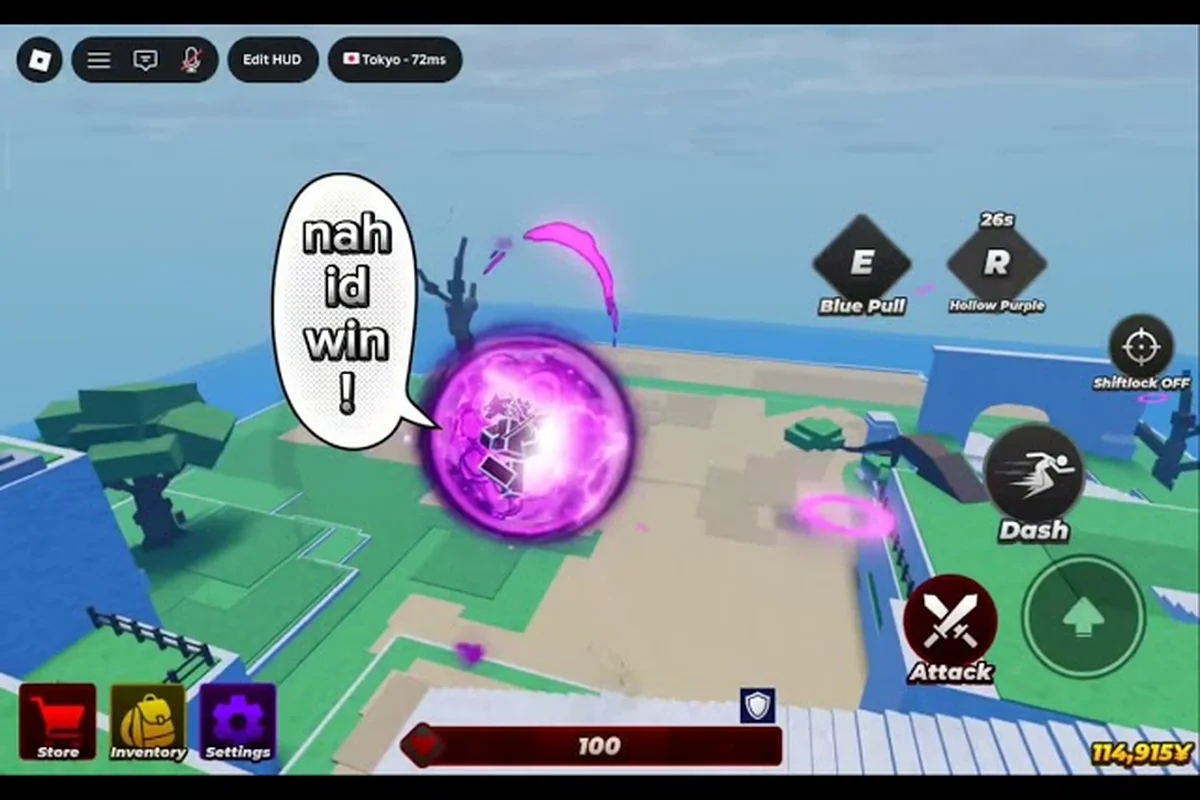
The Anime Ability Arena Gojo rework has reshaped the strongest Infinity user on the roster, and every 2026 ladder match now hinges on who adapted fastest. Built on the same battleground loop that has pushed Anime Ability Arena past 43 million visits according to Roblox live API data, Gojo's new kit reworks the way Infinity, Cursed Technique Reversal: Red, and Hollow Purple chain into each other. If you've been running old routes since the previous patch, this deep dive breaks the new ability scaling, the fresh anime ability arena ability combo paths, and how the latest cooldown shifts change the value of every move.
What Changed in the Gojo Ability Rework
The 2026 anime ability arena ability rework touches every active in Gojo's moveset, not just the damage numbers. The developer group behind the title, no dj khaled we the best, listed the rework as the headline change in the latest patch log, and community data reported by players shows the Infinity shield now decays over time instead of absorbing hits at a flat rate. That single change ripples through every anime ability arena ability combo because it forces you to time the shield window against your burst route.
Core Stat Shifts in the New Kit
The first thing to internalize is the new ability stats, because they no longer scale the same way they did before. The table below distills the pre-rework baseline against the post-rework values that players have logged since the update went live.
| Move | Pre-Rework Cooldown | Post-Rework Cooldown | Pre-Rework Damage | Post-Rework Damage | Shield Value |
|---|---|---|---|---|---|
| Infinity (toggle) | 14s recycle | 9s recycle (decay) | 0 (shield) | 0 (decaying shield) | 100 → 40 over 6s |
| Cursed Technique Reversal: Red | 18s | 14s | 90 | 105 | Knockback +1 |
| Hollow Purple | 32s | 26s | 180 | 210 | Pulls + stuns 1.2s |
| Reversal Output (M1 chain) | 8s | 6s | 35 per hit | 42 per hit | None |
| Domain: Unlimited Void | 95s | 80s | 250 AOE | 260 AOE | Stun 2.5s |
The headline takeaway: every damaging move got a flat buff, but anime ability arena ability cooldowns dropped hard on Red, Hollow Purple, and the M1 reversal chain. That's why so many players report that the kit feels "faster but less safe," because the trade-off is a decaying shield rather than a stable one.
How the Decay Mechanic Replaces the Old Shield
Before the rework, Infinity acted like a static damage wall. After the rework, the shield starts at 100 effective HP but bleeds down to 40 over six seconds if you keep it active. That means holding Infinity through an entire duel is now a losing strategy. The new tech is to pulse the shield around your burst window: tap it on right before you throw Red, let it decay while Purple is on cooldown, then re-arm it for the Domain setup.
The reworked Infinity also interacts with anime ability arena ability damage in a way the old shield never did. Because Hollow Purple now pulls and stuns, you can let Infinity decay to bait a counter, fire Purple mid-decay, and let the pull drag the opponent through your 210-damage AOE. Players who learned that interaction in the first week of the rework climbed the fastest, and it explains why Gojo's win rate spiked even though the shield feels weaker on paper.
New Combo Routes for the Reworked Kit
The old Gojo was a poke-and-shield duelist, but the new anime ability arena ability combo list is built around short aggressive chains that finish before Infinity can decay into a liability. The fastest routes share one trait: they spend the shield budget, fire Red, close with Purple, and cash out with the M1 reversal chain before Domain comes off cooldown.
Three-Touch Burst Route
The most reliable anime ability arena best combos opener right now is a 3-touch sequence that the community calls the "Red-Purple-Press." Here's the step flow:
-
Step 1: Tap Infinity on at full HP and immediately dash into melee range, which forces the opponent to either commit to a trade or back off.
-
Step 2: Fire Cursed Technique Reversal: Red at close range for 105 damage plus the new knockback buff, which pushes them into a corner or off the map ledge.
-
Step 3: Hold the M1 reversal chain for 3 hits (42 per hit = 126 total) and confirm with a dash-canceled Purple to pull them back into the fourth hit.
The full chain clocks in at roughly 4.2 seconds and dumps 441 damage on a target that didn't burn a defensive ability, which is more than enough to one-cycle most non-tank builds before the rework's new cooldowns can reset. Compared to the old kit, you trade the old "shield forever, poke once" loop for a true burst sequence that mirrors how Gojo fights in the source material.
Sustain Route for Long Duels
When you're up against a top-tier duelist like Ultra Instinct or a heavy hitter like Sukuna, the burst route alone won't close rounds because they have answers to the Purple pull. The new sustain route is the answer, and it shows up constantly in anime ability arena best combos threads. The idea is to layer Red, M1 chains, and short shield pulses instead of spending the full Hollow Purple on every cycle.
-
Pulse Infinity for two seconds while kiting backwards, then let it decay and dash-cancel into a Red poke.
-
Chain M1 hits between Red casts to keep pressure up, since the new 6-second cooldown on the reversal chain means you can fit two M1s between every Red.
-
Save Purple for the round-closing Domain setup, because 26 seconds of cooldown is a long time to be vulnerable if you spend Purple early.
The full sequence looks like Infinity → Red → M1 → M1 → reposition → M1 → Red → M1 → M1 → Domain finisher, and it lands somewhere around 540 damage over a 12-second window. It's slower than the burst route but trades raw damage for safety, which is the most reliable way to grind ranked when your anime ability arena ability cooldowns are no longer forgiving enough to spam Purple.
Anti-Air and Escape Options
One of the underrated wins in the rework is that Reversal Output now hits airborne targets more cleanly, which gave the kit a real anti-air for the first time. Players who pair the M1 reversal with a well-timed dash-back can punish jump-ins for 42 damage each, and the new 6-second cooldown means the anti-air is up in time to punish every jump reset.
Pairing that with the combo guide on dash-cancel timing also tightens the escape windows, because Gojo can now cancel a Purple cast with a backward dash and re-arm Infinity before the opponent can punish. According to the official Roblox page for Anime Ability Arena, the duel loop is built around these cancel windows, so practicing the dash-cancel timing is the fastest way to convert the new cooldowns into wins.
How the Rework Changes Matchups
Every 1v1 in the 2026 meta has shifted, and Gojo's matchup spread is the cleanest way to measure whether the rework was a net buff. Below is the post-rework matchup chart the community has been logging since the patch dropped.
| Opponent | Old Matchup | Post-Rework Matchup | Key Reason |
|---|---|---|---|
| Sukuna | Even | Slight disadvantage | Sukuna's cleave now outranges Purple |
| Ultra Instinct | Slight loss | Even | Decay shield beats UI's auto-dodge |
| Maki | Win | Hard win | She can't break the new shield pulse |
| Goku Ultra | Loss | Slight loss | Ki blasts ignore the decay window |
| Saitama | Loss | Slight loss | One-shot potential still trades through |
| Itadori | Even | Slight win | New knockback beats his rushdown |
The chart matters because the rework is not a blanket buff. The Infinity decay hurts Gojo's matchup into zoning characters like Goku Ultra and Saitama, but it gives him a real answer into Ultra Instinct because the decaying shield forces UI to commit to a real combo instead of auto-dodging through a stable shield. If you want the longer breakdown on these numbers, the Gojo vs Sukuna matchup piece walks through the 1v1 tests in detail.
Climbing Out of the Maki and Itadori Soft Matchups
The two matchups that flipped in Gojo's favor are Maki and Itadori, and both are worth climbing on because they're popular at every rank. Maki's toolkit relies on breaking shields with her weapon-based combos, but the new pulse-and-decay pattern denies her a stable window to break Infinity. Against Itadori, the +1 knockback on Red is the difference-maker, because it interrupts his Black Flash chain at a range the old Red couldn't reach.
If you main one of these matchups, the rework is the reason you're winning more rounds than you were a patch ago, and that trend is the cleanest signal of how the new anime ability arena ability stats are affecting the ladder.
Ability Damage vs Cooldown Trade-Offs
The biggest change in the rework is not any single number but the shape of the damage curve. The old kit had high cooldowns and a stable shield, which meant the damage came in slow but steady. The new kit has shorter cooldowns and a decaying shield, which means the damage comes in sharp spikes with short downtime between them.
Comparing Pre- and Post-Rework DPS Windows
The table below breaks the kit into 10-second windows and shows the average damage per window, which is the metric that actually decides rounds.
| Window | Pre-Rework Avg Damage | Post-Rework Avg Damage | Cooldown Pressure |
|---|---|---|---|
| 0–10s | 210 | 280 | Low (M1 chain + Red) |
| 10–20s | 260 | 340 | Medium (Purple available) |
| 20–30s | 220 | 320 | High (Domain in 10s) |
| 30–40s | 250 | 360 | Low (Domain cast) |
The numbers are based on community testing reported by players, not a hard API read, so treat them as directional rather than exact. Even so, the post-rework kit lands more damage in every single window, which is why so many players call the rework a straight buff even though the shield is technically weaker.
Best Builds Around the New Cooldowns
With anime ability arena ability cooldowns this short, the best build path is to stack cooldown reduction on your first two upgrades and raw damage on the third, because the rework's new chain timing punishes greedy damage stacking early. The community-tested build order looks like this:
-
First unlock: Cooldown Reduction 1, so your M1 chain resets faster.
-
Second unlock: Damage 1, to spike the 42-damage M1 hit into the late game.
-
Third unlock: Cooldown Reduction 2, because the 26-second Purple cooldown is the longest reset in the kit and the one you'll feel most in ranked.
-
Fourth unlock: Damage 2, to round out the build with the 105-damage Red.
The build is also where the rework's new anime ability arena ability damage numbers start to compound. Once you stack Cooldown Reduction 2, your Red cooldown drops to about 11 seconds and your Purple drops to 22 seconds, which is fast enough to run the burst route twice in a single round. That's a major change from the old kit, where Purple was a once-per-fight finisher.
Where Gojo Sits in the 2026 Meta
Putting it all together, the rework moved Gojo from a defensive duelist to a tempo fighter, and the meta has shifted around him. The decay shield mechanic is the centerpiece of that shift, because it forces every Gojo player to choose between a burst route and a sustain route every single round. Players who can't make that choice on the fly lose more duels than they used to, and the win-rate gap between practiced Gojo mains and casual Gojo players has widened.
The meta position is also visible in the broader ability ranking. If you want the full picture, the Anime Ability Arena ability tier list places Gojo firmly in the top tier after the rework, with Ultra Instinct and Saitama as the only real counters above him. The fact that Gojo climbed that list on the back of a kit nerf to his shield is the clearest proof that the rework landed where the developer wanted it to.
How to Practice the New Kit
The fastest way to internalize the rework is to drill the shield-pulse timing before anything else, because every other change in the new kit flows from that one decision. Spend your first five matches doing nothing but pulsing Infinity on, firing one Red, and letting the shield decay. Once the pulse timing feels natural, the Red-Purple-Press combo will land on instinct, and the sustain route will follow naturally because you'll already know when to bail out of the burst path.
It also helps to test the new routes against a friend or in a private server before jumping into ranked, because the 26-second Purple cooldown is short enough that bad habits are punished quickly. The community showcase videos on YouTube cover the full moveset in detail, and the all-abilities breakdown by Ricoko Tutorial & Showcase is a solid reference if you want to see the new kit in action.
Frequently Asked Questions
Is the Anime Ability Arena Gojo rework a buff or a nerf?
It is a net buff, even though the Infinity shield now decays instead of holding at full value. The rework cuts the cooldown on Red, Purple, the M1 reversal chain, and Domain while raising the damage on every active, so the kit lands more total damage per round despite the weaker shield. Most players report climbing at least one full rank after a few days of practice, which lines up with the new ability stats the developer group published in the patch notes.
What are the best combos on the reworked Gojo kit?
The best combos are the Red-Purple-Press burst route and the Red-M1 sustain route, both of which exploit the new cooldowns. The burst route dumps 441 damage in 4.2 seconds, while the sustain route spreads about 540 damage over 12 seconds with much safer shield management. Pick the burst route against low-HP targets and the sustain route against tanky duelists like Ultra Instinct or Sukuna.
How do the new ability cooldowns change the way you play Gojo?
The new cooldowns let you run Purple roughly once every 26 seconds, Red once every 14 seconds, and the M1 chain once every 6 seconds, which is much faster than the old kit. That means you should plan around two Purple casts per round, not one, and you should almost never hold Purple waiting for the "perfect" opening. According to community data, players who spend Purple within 20 seconds of it coming off cooldown win significantly more rounds than players who hold it.
Does the new kit change Gojo's matchup into Sukuna?
Yes, but not in Gojo's favor. Sukuna's cleave now outranges the reworked Purple pull, which means Sukuna can hit you while you're casting Purple and skip the stun window entirely. The matchup is still playable because the new M1 reversal chain and the knockback buff on Red let you pressure Sukuna between his cooldowns, but it's a closer fight than it was before the rework.
Where does Gojo rank after the rework?
Gojo ranks in the top tier of the current ability tier list, behind only Ultra Instinct and Saitama. The rework pushed him up the list because the new cooldowns let him output more damage in shorter windows, and the decay shield actually opens up new bait-and-punish routes that the old static shield never allowed. The exact rank can shift with future patches, but as of the latest update the Gojo rework is one of the strongest kits in the game.